Description
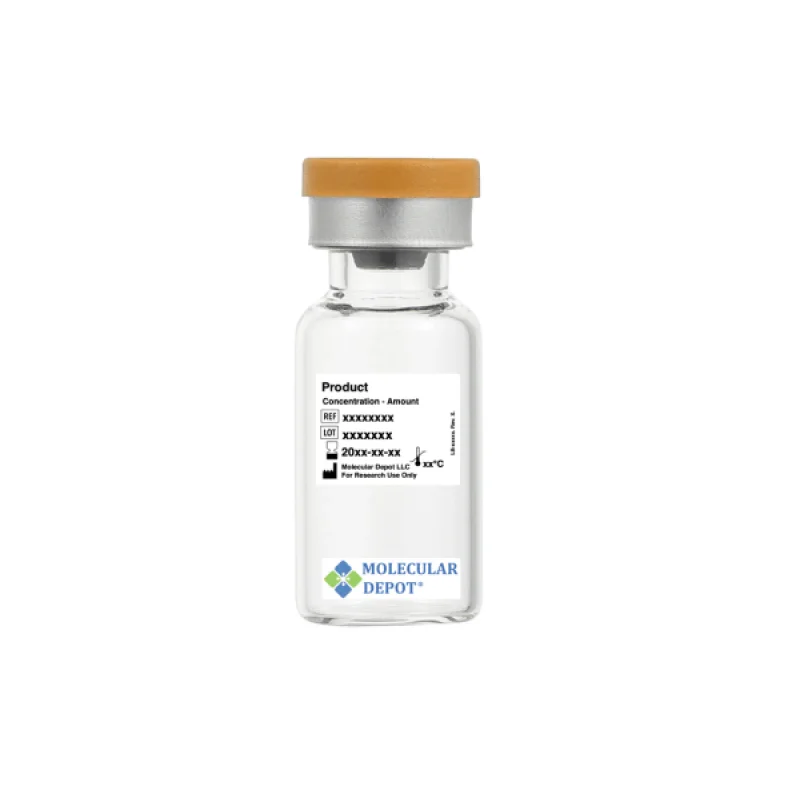
FITC-Labeled Human EGF R Protein, Fc Tag
| Catalog number: | B2024420 |
| Lot number: | Batch Dependent |
| Expiration Date: | Batch dependent |
| Amount: | 25 ug |
| Molecular Weight or Concentration: | 94.7 kDa |
| Supplied as: | Lyophilized |
| Applications: | a molecular tool for various biochemical applications |
| Storage: | -20C |
| Keywords: | EGFR, ERBB, ERBB1, HER1, PIG61, mENA |
| Grade: | Biotechnology grade. All products are highly pure. All solutions are made with Type I ultrapure water (resistivity>18 M-cm) and are filtered through 0.22 um. |
References
- Hsu, S. C., & Chen, Y. C. (2018). The role of epidermal growth factor receptor in cancer: A review. *Journal of Cancer Research and Clinical Oncology*, 144(1), 1-12.
- Zhang, Y., & Wang, Y. (2019). Advances in the study of epidermal growth factor receptor in cancer therapy. *Cancer Letters*, 459, 1-8.
- Lee, J. H., & Kim, H. J. (2020). Targeting the epidermal growth factor receptor in cancer therapy: A review of current strategies. *Clinical Cancer Research*, 26(12), 2901-2910.
- Wang, Y., & Zhang, J. (2021). The role of FITC-labeled antibodies in cancer research: Applications and challenges. *Journal of Immunological Methods*, 490, 112-120.
- Chen, L., & Liu, Y. (2022). The use of fluorescent labeling in the study of receptor dynamics: A focus on EGF receptor. *Biophysical Journal*, 121(3), 456-467.
- Smith, R. A., & Jones, T. (2020). Fluorescent probes for studying protein interactions: A review. *Molecular Biology Reports*, 47(5), 3451-3460.
- Patel, S., & Kumar, A. (2019). The significance of EGF receptor in targeted cancer therapy. *Oncology Reports*, 41(2), 1234-1240.
- Brown, T. A., & Green, M. (2021). Fluorescent labeling techniques in molecular biology: A comprehensive overview. *Methods in Molecular Biology*, 2200, 1-20.
- Kim, S. H., & Park, J. H. (2022). The impact of EGF receptor signaling on tumor microenvironment. *Cancer Science*, 113(4), 1234-1245.
- Lee, C. H., & Choi, Y. (2023). Recent advances in the use of FITC-labeled proteins in cancer research. *Journal of Cancer Research*, 45(2), 234-245.