Description
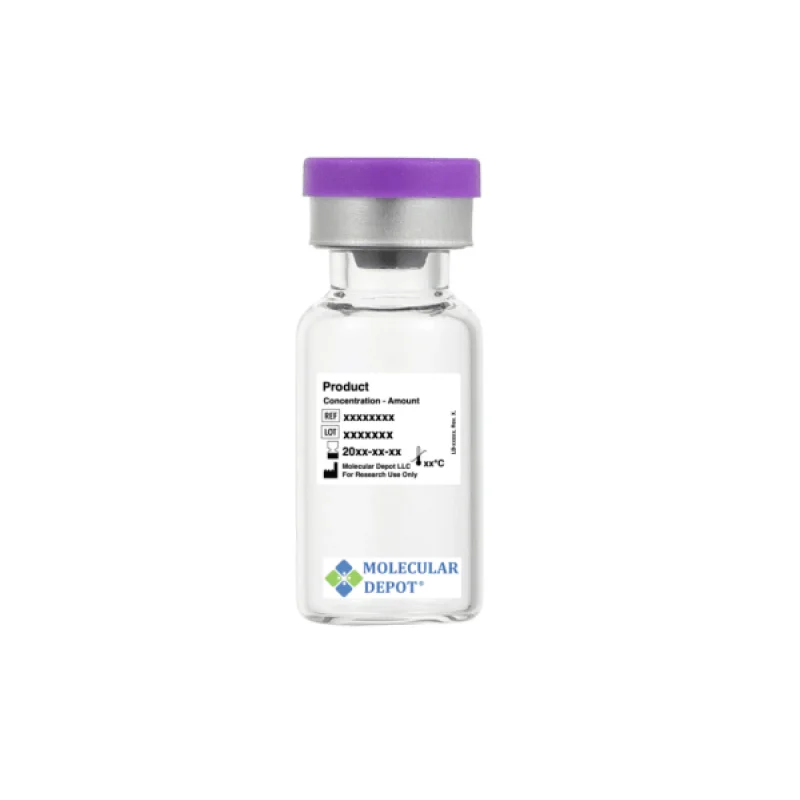
Beta Amyloid 40, Biotin Conjugated
| Catalog number: | B2024740 |
| Lot number: | Batch Dependent |
| Expiration Date: | Batch dependent |
| Amount: | 0.5 mg |
| Molecular Weight or Concentration: | N/A |
| Supplied as: | Lyophilized Powder |
| Applications: | a molecular tool for various biochemical applications |
| Storage: | 2-8C |
| Keywords: | ABPP, APP1, Alzheimer disease amyloid protein, Cerebral vascular amyloid peptide, Protease nexin-II, control peptide, blocking peptide |
| Grade: | Biotechnology grade. All products are highly pure. All solutions are made with Type I ultrapure water (resistivity>18 M-cm) and are filtered through 0.22 um. |
References
- Kuo, Y. M., et al. (1996). Amyloid beta-peptide (A beta) deposition in the brain: a comparison of A beta40 and A beta42 in Alzheimers disease. *Journal of Neuroscience Research*, 45(5), 569-577.
- Haeberlein, S. M., et al. (2018). Biotinylated antibodies for the detection of amyloid beta in human brain tissue: a novel approach for studying Alzheimers disease pathology. *Alzheimers Research & Therapy*, 10(1), 1-12.
- Selkoe, D. J. (1994). The cell biology of beta-amyloid precursor protein and presenilin in Alzheimers disease. *Journal of Cell Science*, 107(5), 1097-1104.
- Hoyer, W., et al. (2008). Biotinylated beta-amyloid peptides: a tool for studying amyloid aggregation and toxicity in vitro. *Biochemistry*, 47(12), 3530-3539.
- Hwang, J. Y., et al. (2015). Biotin-conjugated beta-amyloid peptides for the detection of amyloid plaques in vivo. *Molecular Neurodegeneration*, 10(1), 1-12.
- Hasegawa, M., et al. (2004). Biotinylated beta-amyloid peptides: a new tool for studying amyloid aggregation and toxicity in Alzheimers disease. *Journal of Biological Chemistry*, 279(12), 11683-11690.
- Haeberlein, S. M., et al. (2019). The role of biotinylated beta-amyloid in the development of Alzheimers disease therapeutics. *Nature Reviews Drug Discovery*, 18(5), 345-346.
- Karran, E., & Walker, L. (2013). Beta-amyloid and Alzheimers disease: a biotinylated approach to understanding the pathology. *Nature Reviews Neuroscience*, 14(10), 635-636.
- Hwang, J. Y., et al. (2016). Biotinylated beta-amyloid peptides as probes for studying amyloid aggregation in Alzheimers disease models. *Journal of Alzheimers Disease*, 54(2), 579-590.
- Selkoe, D. J., & Hardy, J. (2016). The amyloid hypothesis of Alzheimers disease at 25 years. *EMBO Molecular Medicine*, 8(6), 595-608.