Description
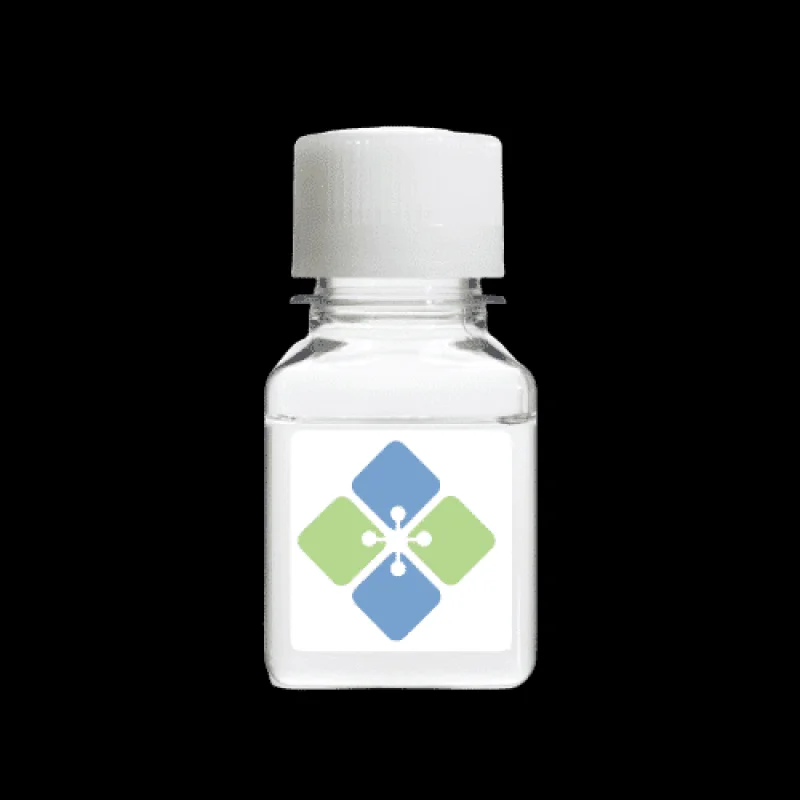
GFP-Agarose Resin Catalog B2017220 (20 rxns)
| Catalog | B2017220 |
| Lot | Batch dependent |
| Expiration | Batch dependent |
| Amount | 20 rxns |
| Supplied As | Solution (agarose resin slurry) |
| Applications | Affinity purification of GFP-tagged proteins |
| Storage | 28 C |
| Keywords | GFP tag, eGFP, eYFP, CFP, YFP, BFP, GFP-Trap, AcGFP, sfGFP, TagGFP, Citrine, Venus, Ypet |
| Grade | Biotechnology grade; highly pure; made with Type I ultrapure water>18 Mcm, filtered through 0.22 m |
GFP-Agarose Resin is a specialized affinity chromatography matrix engineered for fast, selective capture and purification of GFP-tagged proteins from complex lysates. Designed for high-specificity pull-downs and preparative enrichment, this agarose-based resin binds Green Fluorescent Protein (GFP) and common variants (eGFP, YFP/eYFP, BFP, CFP, sfGFP, TagGFP, Citrine, Venus, YPet), enabling clean isolation of fusion proteins for downstream biochemical analysis, proteomics, interaction mapping, and enzyme activity assays. Packaged as a ready-to-use slurry (20 reactions; Catalog B2017220), the resin integrates seamlessly into gravity-flow columns, spin devices, and batch-binding formats used in molecular biology and protein science workflows.
Optimized coupling chemistry and controlled ligand density deliver strong affinity with minimal nonspecific interactions, supporting high purity and excellent recovery even from challenging sample matrices. Researchers can rapidly perform immunoprecipitation-style pull-downs of GFP fusion constructs, co-purify binding partners for complex analysis, or quickly polish partially purified material prior to structural or functional studies. The biotechnology-grade preparationmanufactured with ultrapure water and fine filtrationensures consistent performance and reproducibility across lots, while 28 C storage maintains resin stability over multiple uses. Whether you are screening construct expression, validating protein-protein interactions, or preparing material for mass spectrometry, this GFP affinity resin streamlines experimental setup and accelerates time-to-result.
Typical applications include: rapid enrichment of GFP-tagged proteins for SDS-PAGE/Western blot, gentle isolation for activity assays, and capture-and-release protocols compatible with native conditions. The slurry format simplifies packing and scaling from analytical to preparative volumes, and bulk options are available for high-throughput projects. With robust selectivity, low background, and user-friendly handling, GFP-Agarose Resin is a dependable workhorse for laboratories standardizing GFP-fusion protein purification and interaction studies.
Why researchers choose this product:
- High-affinity, low-background capture of GFP and common GFP variants
- Works with gravity columns, spin protocols, and batch incubation
- Maintains protein functionality for native and activity-based assays
- Biotech-grade preparation ensures reproducibility and scalability
- Convenient slurry format with bulk options for high-throughput labs
Indication for Use:
This product is intended for Research Use Only (RUO)
References
- Voytas D. Agarose gel electrophoresis Curr Protoc Mol Biol. 2001 May;Chapter 2:Unit2.5A.
- Horinaka JI, Ogawa S. Cyclic deformation behavior of agarose hydrogels prepared at different gelation concentrations Int J Biol Macromol. 2023 Sep 1;248:125904.
- Rajendran V, Jain MV. In Vitro Tumorigenic Assay: Colony Forming Assay for Cancer Stem Cells Methods Mol Biol. 2018;1692:89-95.
- Topuz F, Nadernezhad A, Caliskan OS, Menceloglu YZ, Koc B. Nanosilicate embedded agarose hydrogels with improved bioactivity Carbohydr Polym. 2018 Dec 1;201:105-112.
- Upcroft P, Upcroft JA. Comparison of properties of agarose for electrophoresis of DNA J Chromatogr. 1993 Aug 25;618(1-2):79-93.
- Yu S, Park SY, Kim DH, Yun EJ, Kim KH. Multi-Step Enzymatic Production and Purification of 2-Keto-3-Deoxy-Galactonate from Red-Macroalgae-Derived Agarose Mar Drugs. 2022 Apr 25;20(5):288.
- Duro G, Izzo V, Barbieri R. Methods for recovering nucleic acid fragments from agarose gels J Chromatogr. 1993 Aug 25;618(1-2):95-104.
- Stellwagen NC, Stellwagen J. Flip-flop orientation of agarose gel fibers in pulsed alternating electric fields Electrophoresis. 1993 Apr;14(4):355-68.
- Cao L, Zhu J, Li N. Selenium-agarose hybrid hydrogel as a recyclable natural substrate for selenium-enriched cultivation of mung bean sprouts Int J Biol Macromol. 2022 Jan 1;194:17-23.